
TL;DR
Three things define the state of AI video generation in 2026:
- Quality has crossed the professional threshold. Native 2K resolution, built-in audio-visual fusion, and multi-modal input mean AI-generated video is no longer a novelty -- it is production-ready content that ships in commercial workflows every day.
- The competitive landscape has matured. Ten or more serious platforms now compete across different tiers, from full-featured commercial tools (Seedance, Sora, Veo) to specialized players (Runway, Kling, Pika) to open-source alternatives (Wan, CogVideoX). Choosing the right tool matters more than ever.
- The hardest problems remain unsolved. Long-form narrative coherence, complex multi-person interactions, and precise brand control still challenge every platform. Knowing what AI video cannot do is as important as knowing what it can.
Read on for the full analysis: timeline, trends, competitive landscape, honest capability assessment, ethics, and five predictions for what comes next.
Two years of explosive progress: from Sora's research preview in February 2024 to a mature, multi-platform ecosystem generating production-grade 2K video with synchronized audio in early 2026.
The AI Video Revolution: A 2026 Snapshot
Two years ago, AI video generation was a research demo. Today it is a $1.8 billion market growing at over 45% annually. The speed of this transformation has no precedent in creative technology -- not even the digital photography revolution of the 2000s moved this fast.
To understand where we are, you need to understand how we got here.
The Timeline: From Research Demo to Production Tool
Early 2024: The Starting Gun. OpenAI announced Sora in February 2024 with a handful of stunning demo videos that electrified the creative industry. But Sora was preview-only -- no public access, no API, no way for anyone outside OpenAI to actually use it. The demos proved the concept. The wait proved the demand.
Mid 2024: The First Wave Goes Public. While the world waited for Sora, other platforms shipped. Kuaishou launched Kling in June 2024, offering the first publicly accessible AI video generator with meaningful quality. Luma AI released Dream Machine the same month. Suddenly, anyone could generate AI video. The quality was rough -- 720p, 4-6 seconds, frequent artifacts -- but the barrier was broken. People were making things.
Late 2024: Sora Arrives, Competition Intensifies. Sora finally launched publicly in December 2024, bundled with ChatGPT Plus subscriptions. Pika released version 1.5 with its distinctive Pikaffects feature. Runway continued iterating on Gen-3 Alpha. Resolution standardized at 1080p across top-tier platforms. Duration expanded to 10-15 seconds. The quality leap from mid-2024 to late-2024 was dramatic -- what once looked like a blurry approximation began to look like actual footage.
Early 2025: The Multi-Modal Shift. Seedance 1.0 launched, introducing image-to-video and multi-modal input as core concepts rather than afterthoughts. Runway released Gen-3 Alpha Turbo with significantly faster generation times. The industry began splitting into two camps: text-only platforms (Sora, early Pika) and multi-modal platforms (Seedance, Kling) that accepted images, video references, and text simultaneously.
Mid 2025: Refinement and Specialization. Kling 2.0 arrived with extended duration support up to 60 seconds. Pika 2.0 doubled down on ease of use and unique effects. Seedance 1.0 Pro pushed quality boundaries. Platforms began differentiating on strengths rather than simply racing to match each other's feature lists. The market started to segment.
Late 2025: The Audio-Visual Frontier. Google entered with Veo 2, bringing strong physics simulation and integration with the Google Cloud ecosystem. Runway launched Gen-4 with professional-grade editing tools. The biggest paradigm shift: audio. Platforms began generating not just video but complete audio-visual experiences -- sound effects matched to motion, background music synced to mood, lip sync in multiple languages. Video was no longer silent.
Early 2026: The Current State. Seedance 2.0 launched with quad-modal input (image, video, audio, text), native 2K resolution, and built-in audio generation. Sora 2 improved duration and text understanding. Google released Veo 3 with native audio-visual fusion. Kling 3.0 pushed duration to 2 minutes. Alibaba open-sourced Wan, giving the community a research-grade model to build on. The technology crossed from "impressive demo" to "daily production tool."
The Numbers Tell the Story
The ai video generation market reached an estimated $1.8 billion in 2026, growing at a 45%+ compound annual growth rate. But market size alone does not capture the real story. Adoption data reveals how deeply AI video has penetrated actual workflows:
- 65% of marketing teams have used AI video generation tools at least once, up from roughly 12% in early 2024.
- 40% of direct-to-consumer e-commerce brands use AI-generated product videos in their listings or ad creatives.
- 80%+ of social media content creators under 30 have experimented with AI video tools.
- 25% of educational content creators use AI video for instructional material, explainers, or course content.
These are not projections. These are usage rates. The technology has moved from the early-adopter fringe to the professional mainstream in under two years.
5 Defining Trends of AI Video in 2026
Five trends define the current state of ai video technology. Each represents a capability leap that was theoretical or nonexistent just 18 months ago. Together, they explain why 2026 is the year AI video went from "interesting experiment" to "essential tool."
Trend 1: Resolution and Fidelity Leap
The resolution trajectory of AI video generation mirrors the early years of digital cinema, compressed into months rather than decades.
In early 2024, the best publicly available AI video generators produced output at 480p to 720p. The images were soft, details were mushy, and the footage looked unmistakably synthetic. By late 2024, 1080p became the baseline for top-tier platforms, with noticeably sharper detail, more consistent texturing, and better handling of fine elements like hair, fabric, and environmental particles. In early 2026, the leaders have pushed to native 2K resolution (2048x1080), with 4K actively in development.
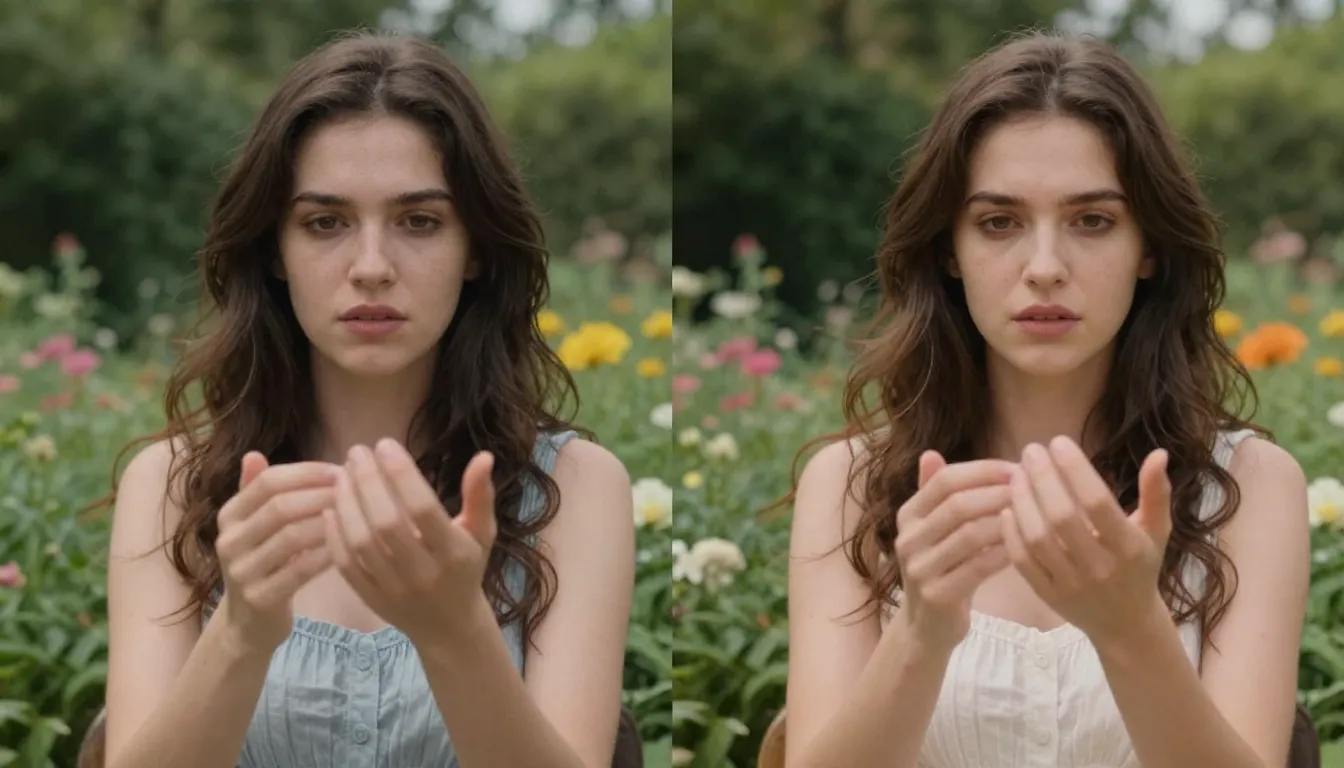
The same conceptual prompt rendered across AI video generation eras. Left: early 2024 (720p, visible artifacts, soft detail). Right: early 2026 (2K, sharp textures, cinematic lighting). The quality improvement is not incremental -- it is generational.
But resolution is only part of the fidelity story. The real breakthroughs are in visual coherence: how consistently the AI maintains detail across frames.
Temporal consistency -- the ability to keep textures, lighting, and fine details stable as the camera moves and subjects act -- has improved dramatically. In 2024, AI video would often "shimmer" or "morph" between frames, with surfaces changing texture mid-shot and features drifting. In 2026, the best platforms maintain visual stability that approaches traditional cinematography standards for clips under 15 seconds.
Who leads on resolution and fidelity:
- Seedance 2.0 generates at native 2K (2048x1080), currently the highest native resolution among commercial AI video platforms. The output exhibits strong cinematic color grading, consistent lighting dynamics, and sharp detail down to fine textures.
- Google Veo 3 matches or approaches 2K quality through its proprietary diffusion architecture, with particularly strong physics-based rendering.
- Sora 2 caps at 1080p but achieves excellent visual coherence and scene understanding at that resolution.
What gaps remain:
4K output is not yet standard on any major platform. Very fast motion (martial arts, sports, rapid camera movement) still produces occasional artifacts across all tools. And the "last 10%" of photorealism -- the subtle interplay of subsurface scattering in skin, the precise way light refracts through water droplets, the micro-movements of breathing -- remains slightly beyond reach for most generated content. The gap is closing, but it is still visible to trained eyes.
Trend 2: Multi-Modal Input Becomes Standard
The most significant conceptual shift in AI video generation over the past two years is the move from text-only input to multi-modal input. This is not just a feature upgrade. It represents a fundamentally different approach to creative control.
In the text-only paradigm of early AI video, you described what you wanted in words and hoped the model interpreted your vision correctly. "A woman in a red dress walking through a rainy Tokyo street at night" might produce something beautiful, but the specific woman, the specific dress, the specific street were entirely up to the AI's interpretation. You had influence but not control.
Multi-modal input changes this equation. When you can upload reference images of the exact character, reference videos of the exact camera movement, an audio track with the exact mood, and text specifying the scene details, you move from suggestion to direction. The AI becomes a collaborator that understands your specific creative vision rather than a black box interpreting your approximate description.
Why multi-modal input matters for professional workflows:
- Brand consistency. Upload your brand assets, product photos, and style references. The AI generates content that looks like your brand, not a generic approximation.
- Character persistence. Upload multiple angles of the same character. The AI maintains that specific identity across every scene. No more "character drift" where your protagonist's face changes between shots.
- Motion control. Upload a reference video showing the camera movement you want. The AI replicates that movement precisely, giving you cinematographer-level control without describing complex camera paths in text.
- Audio-driven creation. Upload a music track and let the AI generate visuals that match the beat, tempo, and emotional arc.
Seedance 2.0 pioneered the quad-modal approach -- accepting image, video, audio, and text simultaneously, with up to 12 reference files per generation. Other platforms are catching up. Runway has added image reference capabilities. Kling supports motion reference. Google Veo integrates with its broader media ecosystem. But the full quad-modal stack -- all four modalities in a single generation -- remains rare.
The trajectory is clear: text-only input is becoming the entry-level experience. Multi-modal input is becoming the professional standard. Platforms that do not offer meaningful reference-based control will increasingly be seen as limited.
Trend 3: Audio-Visual Fusion
For the first 18 months of the AI video revolution, AI-generated video was a silent medium. Every platform produced muted footage. To create anything publishable -- a social media clip, a product ad, a marketing video -- you had to take the silent output to a separate editing tool, source appropriate audio, and manually synchronize sound to picture.
This was more than an inconvenience. It was a workflow bottleneck that limited who could realistically use AI video. Video editing skills, audio libraries, and synchronization tools added cost, time, and complexity that kept AI video in the hands of professionals rather than making it accessible to the broader creative community.
In late 2025 and early 2026, audio-visual fusion changed this entirely.
Audio-visual feature support across major AI video platforms in early 2026. The gap between platforms with native audio and those without has become one of the most significant differentiators in the market.
What audio-visual fusion includes in 2026:
-
Automated sound effects. The AI analyzes the visual content of the generated video and produces matching sound effects -- footsteps on different surfaces, rain, wind, mechanical sounds, ambient environment noise. A character walking down a gravel path sounds like gravel. A car driving through a city has engine hum and tire noise. These are not generic loops; they are context-matched to the specific visual content.
-
Generated background music. The AI produces a musical score that matches the emotional tone, visual tempo, and genre of the video. You can specify mood (uplifting, dramatic, contemplative) and style (electronic, orchestral, acoustic), and the generated music will sync naturally to the visual pacing.
-
Multi-language lip sync. For videos featuring speaking characters, the AI generates synchronized lip movements in multiple languages. Seedance supports 8 languages. This means the same character model can appear to speak naturally in English, Chinese, Japanese, Korean, Spanish, French, German, and Portuguese -- a capability that would have required expensive localization studios just two years ago.
-
Audio-visual coherence. The most advanced implementations do not just add audio to video. They generate audio and video as an integrated output where the sound informs the visuals and vice versa. A door slamming produces both the visual impact and the corresponding sound in the same generation pass.
The impact on production workflows is measurable. A social media ad that previously required generation (2 minutes) plus editing and audio work (15-30 minutes) now requires only generation (2-3 minutes). For teams producing dozens or hundreds of videos per week, this compression from 20-30 minutes to under 5 minutes per asset is transformative.
Not all platforms have adopted audio-visual fusion. As of early 2026, Seedance 2.0 and Google Veo 3 lead this category with the most complete audio integration. Sora 2 still generates silent video. Runway Gen-4 offers limited audio tools through separate workflows. Kling 3.0 has basic sound effect support. The gap between platforms with native audio and those without is becoming one of the most significant market differentiators.
Trend 4: Democratization of Video Creation
Before AI video generation, creating a professional-quality video required some combination of: a camera ($500-$5,000+), lighting equipment ($200-$2,000+), audio equipment ($100-$1,000+), editing software (free to $600/year), editing skills (months to years of learning), and production time (hours to days per finished minute). The total cost for a single professionally produced short video ranged from $500 to $5,000 or more, depending on complexity.
In 2026, anyone with an internet connection can produce a professional-grade short video for less than $1 in under five minutes. No camera. No lighting. No editing software. No production skills beyond the ability to describe what you want or upload a reference image.
This is not a marginal cost reduction. It is a structural inversion of the economics of video production.
Adoption rates tell the story of democratization:
| Sector | AI Video Adoption (2026 est.) | Primary Use Cases |
|---|---|---|
| Social Media Creators | 80%+ | Short-form content, effects, transitions |
| Marketing Teams | 65%+ | Ad creatives, social content, product demos |
| E-Commerce | 40%+ | Product listings, ad campaigns, social proof |
| Education | 25%+ | Instructional videos, visual explanations, course content |
| Real Estate | 30%+ | Property showcases, virtual tours, listing enhancement |
| Small Business | 35%+ | Local advertising, social presence, brand content |
The most striking development is the emergence of new creator archetypes that did not exist before AI video:
- Prompt directors -- creators who specialize in crafting precise, evocative text and multi-modal prompts that consistently produce cinematic output. They understand lighting language, camera terminology, and emotional direction, but their "camera" is a text box and a set of reference uploads.
- AI cinematographers -- professionals who combine AI video generation with traditional editing skills, using AI as a content generation engine and applying their cinematic judgment to selection, sequencing, color grading, and narrative construction.
- One-person studios -- individual creators who produce commercial-grade video content at volumes that previously required teams of 5-10 people, using AI generation for raw content and their own expertise for creative direction and quality curation.
The impact on traditional video production is restructuring, not replacement. Production studios that once charged $2,000 for a 30-second product video are not vanishing. They are repositioning. The high end of production -- feature-quality content, complex multi-person narratives, brand documentaries, live-action campaigns requiring real locations and actors -- remains firmly in human hands. What has changed is the bottom 70% of the video production market: simple product demos, social media content, ad variations, explainer videos, and generic B-roll. AI has absorbed this tier almost entirely on the basis of cost and speed.
Trend 5: Character Consistency and Narrative Control
The holy grail of AI video generation has always been narrative: the ability to tell a coherent story with consistent characters across multiple scenes and shots. In 2024, this was essentially impossible. Each generation was an isolated event. A character generated in one clip bore no relationship to the same character described in the next clip.
In 2026, character consistency and narrative control have progressed from "impossible" to "basically usable with caveats."
What works now:
- Single-session character persistence. Within a single generation session, most platforms maintain character identity reliably. The same face, clothing, and body proportions appear consistently throughout a 10-15 second clip.
- Reference-based character locking. Platforms like Seedance that accept reference images can maintain character identity across separate generation sessions. Upload 5-9 photos of a character, and the AI preserves that specific identity in new clips generated hours or days later.
- Scene-to-scene visual continuity. Color palettes, lighting conditions, and environmental details can be maintained across sequential clips using reference-based workflows.
- Basic storyboard planning. Sora's storyboard feature and similar multi-shot planning tools on other platforms let creators define key frames and scene transitions before generation begins.
What still does not work well:
- Extended narratives beyond 1-2 minutes. Generating a coherent 5-minute story with character consistency, narrative progression, and visual continuity across 20+ individual clips remains extremely difficult. The cumulative visual drift across many generations creates noticeable inconsistency.
- Complex multi-character interactions. Two characters talking face-to-face works reasonably well. Three or more characters interacting in dynamic, physically overlapping ways -- a group conversation, a dance sequence, a team sport -- produces frequent errors in identity assignment, spatial awareness, and physical interaction.
- Subtle emotional arcs. AI video can convey broad emotions (happiness, sadness, anger) through expression and body language. Subtle emotional transitions -- the moment a character's confidence wavers, the slight tension between two people who are pretending everything is fine -- remain beyond the technology's grasp.
- Continuity across wardrobe and prop changes. If a character changes clothing between scenes, maintaining facial identity while updating the wardrobe is inconsistent. The AI sometimes drifts the face when the clothing changes.
The trajectory is encouraging. Character consistency that was impossible 18 months ago is now functional for short-form commercial content. For marketing videos, social media series, product demonstrations, and educational content with recurring characters, the current state is production-usable. For short films, long-form narrative content, and complex dramatic storytelling, significant limitations remain.
The Competitive Landscape: Who's Leading in 2026
The AI video generation market has stratified into three distinct tiers. Understanding this landscape is essential for choosing the right tool -- and for understanding where the technology is headed.
The AI video generation competitive landscape in early 2026. Three tiers have emerged: full-featured platforms competing on breadth, specialized players competing on specific strengths, and open-source alternatives competing on flexibility and cost.
Tier 1: Full-Featured Platforms
These platforms compete on breadth of capability. They aim to be your primary AI video tool for most use cases.
Seedance 2.0 (ByteDance, Seed Research Team) -- the most feature-complete platform in early 2026. Quad-modal input (image, video, audio, text with up to 12 reference files), native 2K resolution, built-in audio generation with sound effects, music, and 8-language lip sync, strong character consistency through reference images, and competitive pricing with a free tier. Seedance's core advantage is that it produces complete, publish-ready content -- video with audio -- in a single generation step. The platform excels at commercial content production, brand-consistent creative work, and any workflow that involves existing visual assets. Primary limitation: maximum 15-second duration.
Sora 2 (OpenAI) -- the strongest pure text-to-video platform. OpenAI's deep expertise in language understanding translates into superior prompt interpretation. Complex, nuanced text descriptions are understood and rendered more faithfully than on any competing platform. Sora 2 supports up to 20-second duration, offers a storyboard editor for multi-shot narrative planning, and integrates seamlessly with the ChatGPT ecosystem. The brand recognition is unmatched -- "Sora" is the name most people think of when they think of AI video. Primary limitations: text-only input (no image or audio references), no native audio generation, minimum $20/month entry price, geographic restrictions.
Google Veo 3 (Google DeepMind) -- the fastest-growing entrant in the market. Veo 3 brings Google's computational resources and research depth to bear on the video generation problem. Strong physics simulation, native audio-visual fusion (audio and video generated as an integrated output), and deep integration with Google Cloud, YouTube, and the broader Google ecosystem. Veo is particularly strong in scenarios that require realistic physical interactions -- fluid dynamics, particle effects, rigid body physics. Primary limitation: ecosystem lock-in to Google services, newer platform with less community feedback and fewer production case studies.
Tier 2: Specialized Players
These platforms compete on specific strengths rather than trying to match the breadth of Tier 1.
Kling 3.0 (Kuaishou) -- the duration leader. Kling's defining feature is video length: up to 2 minutes of continuous generation, far exceeding any competitor. For creators who need extended sequences -- walkthroughs, demonstrations, narrative content, music video segments -- Kling is the only viable option without extensive clip stitching. Quality at shorter durations is competitive with Tier 1 platforms. Strong value proposition with aggressive pricing. Particularly popular in Asian markets.
Runway Gen-4 (Runway) -- the professional editor's choice. Runway has consistently targeted professional post-production workflows. Gen-4 includes Motion Brush (paint-based motion control), Director Mode (camera and scene staging), and deep integration with professional editing tools. For creators who already work in Premiere Pro, After Effects, or DaVinci Resolve, Runway slots into existing workflows more naturally than any competitor. Less focused on standalone generation and more focused on being a powerful component in a professional pipeline.
Pika 2.0 (Pika Labs) -- the most accessible entry point. Founded by Stanford researchers, Pika has always prioritized ease of use over feature depth. Pika 2.0 offers the lowest barrier to entry in the market, with an intuitive interface, distinctive Pikaffects (unique visual transformation effects), and pricing designed for individual creators. If you have never used an AI video tool before, Pika is the least intimidating place to start. Less suitable for professional production at scale.
Tier 3: Open Source and Self-Hosted
These options appeal to technical teams, researchers, and organizations with specific compliance or cost requirements.
Wan (Alibaba) -- the leading open-source video generation model as of early 2026. Wan is fully self-hostable, meaning organizations can run it on their own infrastructure with no per-generation costs, no usage limits, and complete data privacy. Quality approaches but does not match Tier 1 commercial platforms. Requires significant technical expertise and GPU resources to deploy. Ideal for enterprises with strict data residency requirements, research teams, and developers building custom video generation pipelines.
CogVideoX (Tsinghua University / Zhipu AI) -- a research-grade model pushing the boundaries of video understanding and generation. More useful as a foundation for custom research and development than as a production tool. Important for the academic community and for teams building next-generation video AI systems.
HunyuanVideo (Tencent) -- an open-source competitor with strong Chinese language support and Tencent's backing. Offers an alternative to Wan for teams seeking open-source video generation with different architectural approaches and training data distributions.
Platform Comparison Table
| Platform | Max Resolution | Max Duration | Input Modalities | Native Audio | Free Tier | Best For |
|---|---|---|---|---|---|---|
| Seedance 2.0 | 2K (2048x1080) | 15s | Image + Video + Audio + Text | Yes (SFX, Music, Lip Sync) | Yes | Multi-modal creative production |
| Sora 2 | 1080p | 20s | Text only | No | No ($20/mo min) | Text-driven imagination |
| Google Veo 3 | ~2K | 15s | Text + Image | Yes (native fusion) | Limited | Physics-heavy, Google ecosystem |
| Kling 3.0 | 1080p | 120s | Image + Video + Text | Basic SFX | Yes | Long-duration content |
| Runway Gen-4 | 1080p | 15s | Image + Text + Motion Brush | Limited | Trial only | Professional post-production |
| Pika 2.0 | 1080p | 10s | Text + Image | No | Yes | Beginners, quick effects |
| Wan (Open Source) | 1080p | 15s | Text + Image | No | Free (self-hosted) | Self-hosted, no usage limits |
| HaiLuo (MiniMax) | 1080p | 10s | Text + Image | No | Yes (generous) | Free volume generation |
For a deeper dive into each platform with side-by-side output examples, read our complete comparison of the best AI video generators in 2026.
What AI Video Can and Can't Do: An Honest Assessment
The discourse around AI video generation oscillates between breathless hype and dismissive skepticism. Neither serves creators well. Here is an honest, nuanced assessment of what the technology genuinely does well, where it still falls short, and what the limitations mean for practical use.

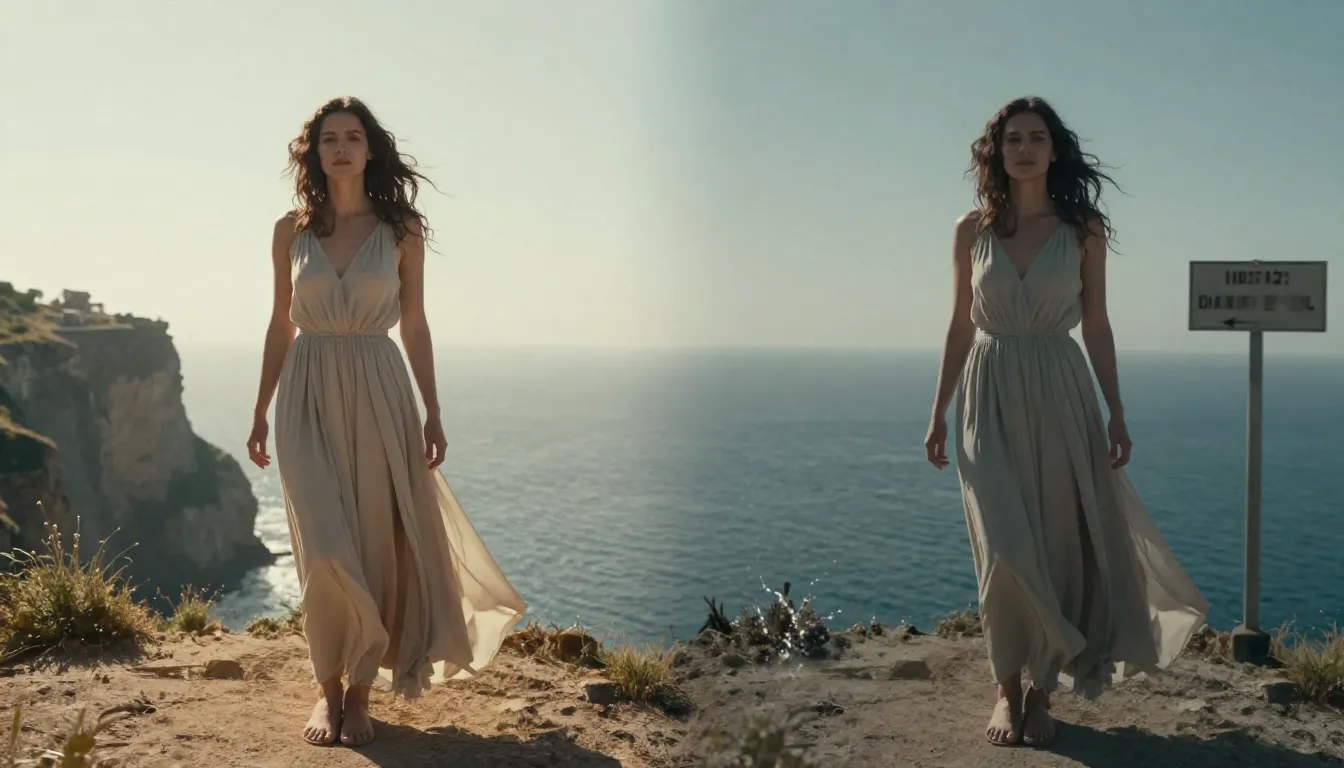
State-of-the-art AI video generation in early 2026. At its best, the technology produces output that is visually indistinguishable from professional cinematography in short clips -- but "at its best" and "consistently" are different things.
What AI Video Does Well in 2026
Short-form content under 30 seconds: excellent quality. For social media clips, ad creatives, product showcases, and promotional content in the 5-15 second range, AI video generation is production-ready. The quality is high enough that most viewers cannot distinguish AI-generated content from traditionally filmed footage at this duration. This is the sweet spot where AI video delivers the most value today.
Single-subject, single-scene videos: reliable. A person walking through a scene. A product rotating on a display. A landscape with atmospheric effects. Scenarios involving one primary subject in one coherent environment generate with high consistency and quality. The simpler the scene composition, the more reliable the output.
Stylized and artistic content: often stunning. AI video generation excels when you push away from photorealism toward artistic interpretation. Painterly styles, anime aesthetics, cinematic noir, surreal compositions, and abstract visual treatments are frequently more impressive than the platform's photorealistic output. The AI's creative interpretation adds value in these genres rather than competing with reality.
Product showcases and ad creatives: production-ready. E-commerce product videos, ad variations for A/B testing, and promotional content generated from product photos are now commercially viable. Multiple studies and A/B tests have shown AI-generated product videos performing within 5% of traditionally produced alternatives on conversion metrics. For many brands, the 100x cost reduction justifies any marginal quality difference.
Rapid prototyping and concept exploration: game-changing. Even if you ultimately plan to produce traditionally filmed content, AI video is invaluable for pre-visualization. Generate 10 concept variations in 20 minutes instead of spending a day storyboarding and a week in production to test a single idea. Directors, creative directors, and brand managers use AI video for concept pitching and client presentations before committing to full production.
Social media content at scale: highly efficient. For creators and brands who need to publish multiple videos per day across platforms, AI video generation enables volume that would be physically impossible with traditional production. A single creator can produce 50-100 finished short videos per day -- a volume that would require a dedicated production team of 5-10 people working full time.
What AI Video Still Struggles With
Long-form narrative beyond 1 minute: coherence breaks down. The longer the desired output, the more noticeable the quality degradation and narrative inconsistency. A 10-second clip is almost always excellent. A 30-second clip is usually good. A 60-second continuous narrative begins to show seams -- minor visual inconsistencies, slight character drift, occasional physics violations. Beyond 2 minutes, maintaining coherent quality requires extensive human curation, multiple generation attempts, and careful clip stitching.
Complex multi-person interactions: unpredictable. Two people in a scene works. Two people interacting -- shaking hands, dancing, passing objects -- works about 70% of the time. Three or more people interacting dynamically is where generation becomes unreliable. The AI struggles with spatial relationships between multiple characters, sometimes merging limbs, misassigning identities, or producing physically impossible poses when characters interact closely.
Hands and fingers: improved but inconsistent. The "AI hands problem" is better than it was in 2024 but remains the most commonly cited artifact. Hands at rest or in simple poses are usually fine. Hands performing specific actions -- typing, playing instruments, holding small objects, gesturing -- still produce occasional extra fingers, fused digits, or anatomically incorrect articulation. The rate of hand errors has dropped from roughly 40% of generations to roughly 10-15%, but it remains noticeable.
Text rendering in video: unreliable. If your desired output includes readable text -- a sign in the background, a product label, text on a screen -- expect inconsistency. AI video generators struggle with coherent text rendering. Letters distort, words become illegible, and text that appears correct in one frame may morph in the next. For any content requiring legible text in the video frame, plan to add text overlays in post-production.
Physics consistency: occasional violations. While physics simulation has improved dramatically, every platform still produces occasional violations of basic physics. Objects that should fall sometimes float. Reflections that should match their sources sometimes do not. Liquid behavior, while much improved, still occasionally defies fluid dynamics. These violations are infrequent in simple scenes but become more common as scene complexity increases.
Precise brand guideline adherence: approximate, not exact. AI video can capture the general look and feel of a brand. It cannot precisely match Pantone colors, exact typography, specific logo placement rules, or detailed brand guideline specifications with the reliability that brand managers require. Reference images get you close. "Close" is often sufficient for social media content. It is not sufficient for Fortune 500 brand compliance.
An honest capability map of AI video generation in 2026. The green zone is production-ready. The yellow zone is usable with caveats. The red zone still requires traditional production methods or significant human intervention.
The Uncanny Valley Question
Can people tell the difference between AI-generated video and real footage?
The honest answer: for short clips, most viewers cannot. In blind testing, AI-generated clips under 10 seconds produced by top-tier platforms are identified as AI-generated by only 30-40% of viewers -- barely above chance. For stylized or artistic content, the detection rate drops further because viewers do not expect photorealism.
For longer clips (30+ seconds), detection rates increase to 50-60% as cumulative small artifacts become more noticeable. For clips featuring extended human interaction, close-up hand movements, or readable text, detection rates climb higher.
AI video detection technology is also advancing. Watermarking schemes (both visible and invisible) are being standardized. Google's SynthID and similar systems embed detectable signatures in AI-generated content. Academic research continues to develop classifier models that can distinguish AI video from traditionally filmed footage with increasing accuracy.
For creators, the implications are practical: use AI video where it excels and be transparent about its use where disclosure matters. Social media content, ad creatives, product videos, and commercial B-roll are all legitimate use cases where AI origin is either irrelevant or easily disclosed. Content presented as documentary footage, news, or personal testimony has different ethical obligations. We address this in the ethics section below.
Will AI Replace Video Editors?
This is the question every video professional asks, and the answer is definitive: no. AI video generation does not replace video editors, directors, or cinematographers. It redefines what they do.
What AI does better than humans:
- Raw content generation. Producing a 10-second clip from a text description or reference image in 2 minutes instead of a full day of filming and editing.
- Asset creation at scale. Generating 100 ad variations in an afternoon instead of a week of production.
- Rapid iteration. Testing 20 creative directions before committing to one, at negligible marginal cost.
- Filling content gaps. Generating B-roll, establishing shots, and atmospheric footage that would be expensive or logistically impossible to film.
What humans do better than AI:
- Narrative judgment. Deciding what story to tell, what emotional arc to construct, what cultural context to reference. AI generates content. Humans give it meaning.
- Emotional intelligence. Understanding how an audience will feel when they watch a sequence. Pacing a reveal for maximum impact. Knowing when silence is more powerful than sound. These are human capabilities that no prompt can replicate.
- Brand intuition. Understanding not just what a brand looks like, but what it feels like. The difference between "on-brand" and "technically correct but soulless." This requires understanding brand history, audience psychology, and cultural positioning that lives in human judgment.
- Quality curation. AI generates. Humans curate. Of 10 generations, a skilled editor knows which one has the right energy, which needs adjustment, which should be discarded, and why. This curatorial eye is what separates content from craft.
The new workflow is not AI-or-human. It is AI-and-human.
AI generates the raw material. Humans provide creative direction, quality judgment, narrative structure, and emotional intelligence. The editor's role shifts from "person who operates editing software" to "creative director who uses AI as a generation engine and applies human judgment to selection, sequencing, and refinement."
The historical parallel is instructive. Adobe Photoshop did not replace photographers. It transformed the role of the photographer from "person who captures images" to "person who creates visual content using capture and digital tools." The best photographers today use Photoshop extensively. The best video creators in 2028 will use AI generation extensively. The tool changes. The creative judgment remains human.
Career advice for video professionals: learn AI tools as creative amplifiers, not threats. Understand prompt engineering, multi-modal input strategies, and how to integrate AI generation into existing production pipelines. The video professionals who will thrive in 2027 and beyond are those who combine traditional craft skills with fluency in AI generation. Those who ignore AI tools entirely will find their competitive position eroding -- not because AI is better, but because competitors who use AI will be faster, more prolific, and more cost-effective.
Ethics, Copyright, and Responsible Use
The rapid advancement of AI video generation has outpaced the legal and ethical frameworks designed to govern it. This creates genuine complexity for creators, platforms, and society. Pretending these issues do not exist does not serve anyone. Here is an honest assessment of the ethical landscape.
Copyright Ownership of AI-Generated Video
Who owns an AI-generated video? The legal answer varies by jurisdiction and is still actively being determined.
In the United States, the Copyright Office has maintained that AI-generated content without meaningful human creative input cannot be copyrighted. However, content that involves significant human creative direction -- selecting inputs, crafting prompts, curating outputs, editing and composing final works -- is more likely to receive copyright protection. The degree of human involvement matters, and no bright-line rule exists yet.
In the European Union, the AI Act imposes transparency requirements on AI-generated content but does not directly address ownership. Individual member states are developing their own approaches to AI copyright.
The practical guidance for creators: treat your AI-generated content as you would any other creative work you produce. If you invest meaningful creative direction (specific prompts, curated reference materials, selection from multiple generations, post-production editing), you have a reasonable argument for creative ownership. If you type "make me a cool video" and publish the first result unchanged, your ownership claim is weaker.
Training Data Ethics
Every AI video model was trained on large datasets of existing video and image content. The ethics of this training data are genuinely contested.
The industry concern: many models were trained on content scraped from the internet, including copyrighted material, without explicit consent or compensation to the original creators. Photographers, filmmakers, and artists whose work informed these models received nothing for their contribution.
The platform response varies. Some platforms (particularly open-source projects) use publicly available datasets with varying licensing terms. Some commercial platforms claim to use licensed or internally produced training data. OpenAI, Google, and ByteDance have all faced legal challenges related to training data provenance. No major platform has fully resolved these questions to everyone's satisfaction.
What responsible creators can do: use AI video tools while acknowledging the unresolved nature of training data ethics. Support industry efforts to create fair compensation models for training data contributors. Prefer platforms that are transparent about their data practices.
Deepfake Risks and Platform Safeguards
The same technology that enables creative video generation can be misused to create non-consensual deepfakes, disinformation, and fraudulent content. Every major platform has implemented safeguards:
- Content moderation. Automated systems flag and block generation requests that involve real individuals without consent, explicit content involving identifiable people, and content designed to deceive.
- Watermarking. Most platforms embed invisible or visible watermarks in generated content. Google's SynthID, OpenAI's metadata tagging, and similar systems allow downstream identification of AI-generated video.
- Usage policies. All major platforms prohibit using their tools for non-consensual impersonation, election disinformation, fraud, and harassment.
- Rate limiting and monitoring. Unusual usage patterns that suggest misuse trigger automated review and potential account action.
These safeguards are imperfect. Determined bad actors can circumvent them, particularly with open-source models that lack built-in restrictions. But the industry's approach to safety has matured significantly since the early, unregulated days of AI image generation.
Responsible Use Principles
We advocate for five principles of responsible AI video use:
- Disclose when it matters. You do not need to label every social media post as "AI-generated" (though some platforms require it). You do need to disclose AI origin when presenting content as documentary, testimonial, or journalistic.
- Do not deceive. Using AI video for creative expression, marketing, entertainment, and commercial content is legitimate. Using it to impersonate real people, fabricate events, or create false evidence is not.
- Respect consent. Do not use AI to generate video of real, identifiable individuals without their explicit permission.
- Acknowledge limitations. Be aware of what AI video can and cannot do. Do not represent AI-generated content as having capabilities it does not have.
- Stay informed. The legal and ethical landscape is evolving rapidly. Copyright law, disclosure requirements, and platform policies will continue changing. Stay current with developments in your jurisdiction.
What's Coming Next: 2026 H2 and Beyond
Predicting AI technology even 12 months out has been a humbling exercise for every analyst and commentator since 2023. That said, five trajectories are visible enough to warrant confident predictions. These are not wild speculation -- they are extensions of work already in progress at major labs, with early prototypes or research papers already published.
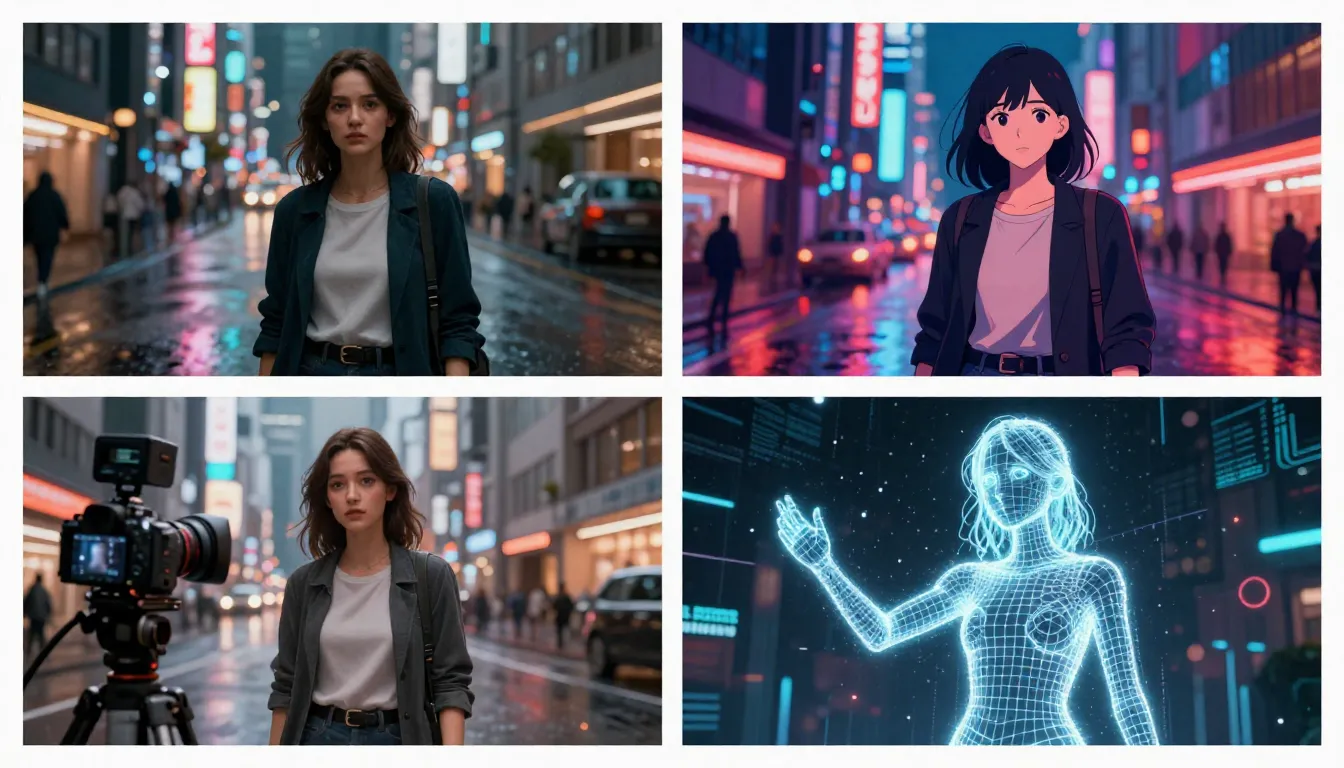
Where AI video generation is headed: from today's impressive but constrained output toward real-time generation, extended narratives, 3D-aware scenes, and fully personalized creative pipelines.
Prediction 1: Real-Time AI Video Generation
Current AI video generation is a batch process. You submit a prompt, wait 1-3 minutes, and receive a completed video. The next frontier is real-time generation -- interactive, conversational video creation where you see the output forming as you describe it and can steer the generation in progress.
Early prototypes already exist. Several research demos have shown video generation at near-interactive frame rates, though at reduced quality. The computational requirements for real-time high-quality generation are enormous, but hardware advances (particularly in inference-optimized GPUs and purpose-built AI accelerators) are closing the gap.
Expected timeline: First commercial real-time generation at reduced quality (720p, limited scene complexity) by late 2026. Real-time 1080p generation by mid-2027. This will transform AI video from a "generate and wait" workflow to an interactive creative experience closer to a real-time 3D engine.
Prediction 2: Extended Duration with Narrative Coherence
The 15-second ceiling that currently defines most AI video output will break. Kling 3.0's 2-minute capability is an early signal. By late 2026, we expect multiple platforms to offer 5+ minutes of continuous, narratively coherent video generation.
The technical challenge is not just duration. It is maintaining visual consistency, character identity, narrative logic, and physical coherence across hundreds of generated frames. Current autoregressive and diffusion-based architectures accumulate errors over time. New architectural approaches -- hierarchical generation, explicit scene graphs, narrative-aware models -- are being developed specifically to address long-form coherence.
Expected timeline: 5-minute coherent generation from at least one major platform by early 2027. 10+ minute generation by late 2027. Feature-length AI-generated content remains further out -- likely 2029 or later for quality that approaches professional standards.
Prediction 3: Native 3D Scene Generation
Current AI video generators produce 2D video. The camera can move, but the underlying representation is a flat sequence of frames. The next leap is 3D-aware generation -- models that create volumetric scenes from which you can render views from any angle, re-light at will, and extract 3D assets.
Research in Neural Radiance Fields (NeRFs), Gaussian Splatting, and related 3D representation techniques is converging with video generation models. Several labs have demonstrated text-to-3D-scene generation that produces explorable, re-renderable environments rather than flat video.
Expected timeline: First commercial text-to-3D-scene products by late 2026 (limited quality). Integration of 3D-aware generation into mainstream video platforms by mid-2027. This will be particularly transformative for gaming, virtual production, architecture visualization, and mixed reality content.
Prediction 4: Personalized Brand Models
Today, every user of an AI video platform shares the same underlying model. Your output has the same stylistic tendencies and capabilities as everyone else's. The next development is fine-tuned, personalized models that learn your brand's specific visual language.
Imagine uploading 100 of your brand's existing videos and receiving a custom model that inherently understands your color palette, your typography style, your preferred camera movements, and your brand's visual personality. Every generation from this personalized model would look "on-brand" without requiring extensive prompting or reference uploads.
Expected timeline: First commercial brand fine-tuning offerings from major platforms by late 2026. Widespread availability by mid-2027. Pricing will likely be premium -- this is an enterprise feature that justifies significant per-model costs.
Prediction 5: Full Localization Pipeline
The convergence of AI video generation, AI voice synthesis, AI translation, and AI lip sync creates the possibility of a complete localization pipeline: generate a video in one language and automatically produce localized versions in 20+ languages, with translated voiceover, matched lip sync, and culturally adapted visual elements.
Components of this pipeline already exist individually. Seedance 2.0 offers lip sync in 8 languages. AI voice synthesis tools produce natural-sounding speech in dozens of languages. Machine translation quality continues to improve. The integration of these capabilities into a single, seamless workflow is the remaining challenge.
Expected timeline: First end-to-end localization pipelines (generate once, localize to 10+ languages automatically) by mid-2026. This will be one of the highest-ROI applications of AI video for global brands and content creators with international audiences.
Frequently Asked Questions
What is the best AI video generator in 2026?
There is no single "best" platform for all use cases. Seedance 2.0 is the most feature-complete option, offering quad-modal input, native 2K resolution, built-in audio, and competitive pricing -- making it the strongest all-around choice for most creators. Sora 2 leads in pure text-to-video quality and is ideal for users already in the ChatGPT ecosystem. Google Veo 3 excels at physics simulation and audio-visual fusion. Kling 3.0 is best for extended duration content. Runway Gen-4 fits best in professional post-production workflows. Choose based on your primary use case, budget, and existing workflow. See our full platform comparison for detailed side-by-side analysis.
How much has AI video quality improved since 2024?
The improvement is generational. In early 2024, AI video output was 480p-720p with visible artifacts, inconsistent textures, and obvious synthetic qualities. In early 2026, top platforms generate native 2K video with cinematic lighting, consistent temporal coherence, and realistic motion physics. The resolution has roughly tripled. The visual coherence -- the ability to maintain consistent detail across frames -- has improved by an even larger factor. Short clips under 15 seconds from the best 2026 platforms are frequently indistinguishable from traditionally filmed footage to untrained viewers.
Can AI-generated videos be detected?
It depends on the content and the detection method. For short clips (under 10 seconds) viewed casually, most viewers cannot distinguish AI-generated video from real footage -- detection rates in blind testing hover around 30-40%, barely above chance. For longer clips, detection rates increase as cumulative artifacts become noticeable. Technical detection methods (watermark reading, artifact analysis, classifier models) are more reliable. Most major platforms embed invisible watermarks (like Google's SynthID) that allow programmatic detection. The arms race between generation quality and detection capability is ongoing, but current detection tools are moderately effective for content produced by major commercial platforms.
Will AI video generators replace video editors?
No. AI video generation changes the video editor's role but does not eliminate it. AI excels at content generation, asset creation, rapid iteration, and scale. Humans remain essential for narrative judgment, emotional intelligence, brand intuition, quality curation, and creative direction. The most effective workflow in 2026 combines AI generation with human creative oversight. Video professionals who learn to integrate AI tools into their practice will be more productive and competitive. Those who ignore AI entirely will find their market position eroding -- not because AI is better at editing, but because competitors who use AI will produce more content faster and at lower cost. The historical parallel is Photoshop: it did not replace photographers; it redefined what photographers do.
Is AI-generated video content legal to use commercially?
In most jurisdictions, yes, with caveats. AI-generated video can be used in commercial contexts -- advertising, product content, social media, marketing -- under the terms of service of the generating platform. All major commercial platforms (Seedance, Sora, Runway, Pika, Kling) grant users commercial usage rights for their generated content. Copyright ownership of AI-generated content is still being determined by courts and legislatures in multiple countries. Content that involves significant human creative direction (crafted prompts, curated references, post-production editing) has a stronger ownership claim. Always review the specific terms of service of your chosen platform and consult legal guidance for high-stakes commercial applications.
Which AI video tool has the best quality?
Seedance 2.0 currently produces the highest resolution output at native 2K (2048x1080), with strong cinematic color grading and detailed textures. Google Veo 3 achieves comparable visual fidelity with particularly strong physics-based rendering. Sora 2 generates excellent quality at 1080p with superior text prompt understanding. Quality is multidimensional -- resolution, coherence, motion realism, lighting, color accuracy, and artifact frequency all matter. No single platform leads in every dimension. For maximum resolution and complete output (video + audio), Seedance 2.0 is the current leader. For specific scenarios like complex physical interactions or extended duration, other platforms may produce better results.
Are there free AI video generators in 2026?
Yes. Seedance 2.0 offers free credits to new users with no credit card required, providing access to full-quality generation including 2K resolution and audio. Pika 2.0 has a free tier with limited daily generations. HaiLuo (MiniMax) offers a generous free tier for basic generation. Kling 3.0 provides limited free credits. Wan is fully open-source and free to use if you self-host on your own hardware (requires significant GPU resources). Sora does not offer a free tier -- it requires a ChatGPT Plus subscription ($20/month minimum). For the best free experience with the highest quality output, Seedance is the strongest option. For unlimited free generation with technical expertise, Wan is the self-hosted alternative.
What are the biggest limitations of AI video generation in 2026?
Five limitations define the current boundary of AI video technology. First, long-form coherence: maintaining narrative consistency, character identity, and visual quality beyond 1-2 minutes remains extremely difficult. Second, complex multi-person interactions: scenes with three or more characters interacting dynamically produce frequent artifacts and spatial errors. Third, hand and finger rendering: improved dramatically since 2024 but still the most common artifact, appearing in roughly 10-15% of generations. Fourth, text in video: readable text within the video frame (signs, labels, screens) renders inconsistently and often illegibly. Fifth, precise brand control: AI video captures the general aesthetic of a brand but cannot reliably match exact color specifications, typography, and detailed brand guidelines. These limitations are real and should inform how you use the technology -- but they do not diminish the enormous value AI video delivers within its proven capabilities.
Conclusion: The Year AI Video Went Mainstream
Two years ago, AI video generation was a research curiosity. One year ago, it was an interesting experiment. Today, it is a mainstream production tool used by millions of creators, marketers, educators, and businesses every day.
The technology has crossed what we call the utility threshold -- the point at which AI video is no longer just impressive but genuinely useful. It saves real time. It reduces real costs. It enables workflows that were previously impossible. When 65% of marketing teams and 40% of e-commerce brands have adopted a technology, it has moved from "cutting edge" to "table stakes."
The five trends we have analyzed -- resolution and fidelity leaps, multi-modal input standardization, audio-visual fusion, democratization, and narrative control improvements -- are not endpoints. They are the foundation for the next wave of capabilities: real-time generation, extended duration, 3D-aware scenes, personalized brand models, and automated localization.
The competitive landscape is the healthiest it has ever been. Full-featured platforms like Seedance, Sora, and Veo push the quality frontier. Specialized players like Runway, Kling, and Pika serve specific workflows. Open-source alternatives like Wan ensure the technology remains accessible beyond commercial gatekeepers. This diversity benefits creators, who can choose the right tool for each specific task rather than being locked into a single ecosystem.
What this means for you: if you create video content of any kind -- marketing, social media, e-commerce, education, entertainment, personal expression -- AI video generation is no longer optional to understand. You do not need to use it for everything. But you need to know what it can do, where it excels, and how it fits into your workflow. The creators and organizations that master this technology will have a structural advantage in speed, cost, and creative volume over those that do not.
The state of AI video in 2026 is this: good enough to ship, flawed enough to improve, and consequential enough that ignoring it is no longer a viable strategy.
Experience the state of the art -- try Seedance 2.0 free -->
See how all the tools compare -->
Related reading: Best AI Video Generators 2026 | What Is Seedance | Seedance vs Sora | Seedance vs Kling | Seedance vs Pika | Seedance vs Veo 3 | Image to Video AI Guide | AI Video for E-Commerce